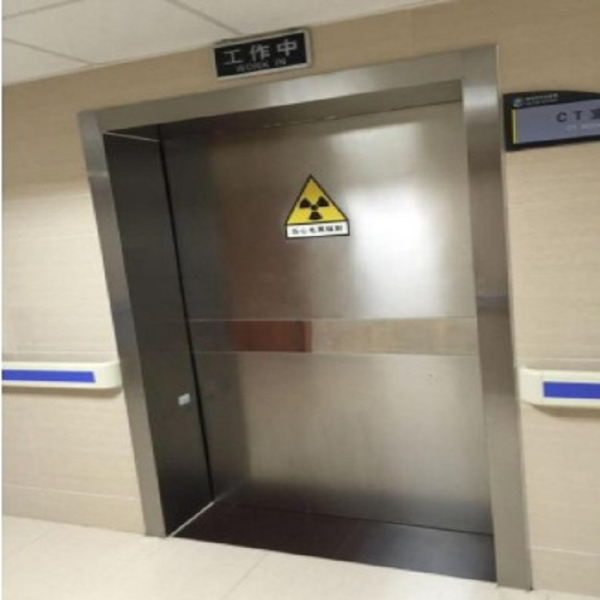
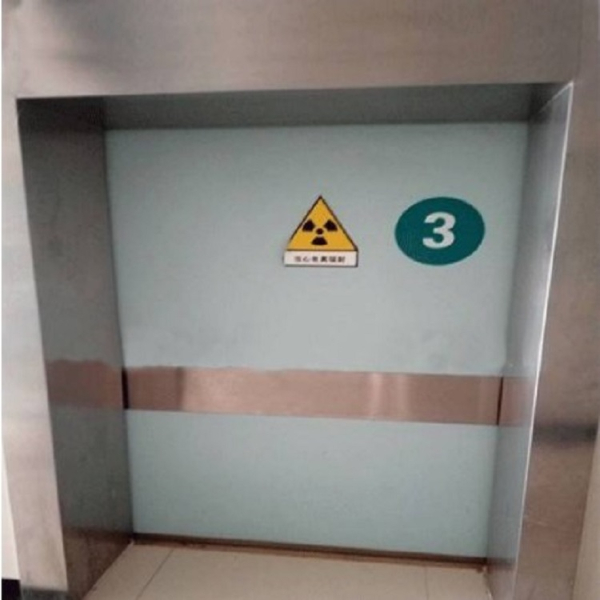
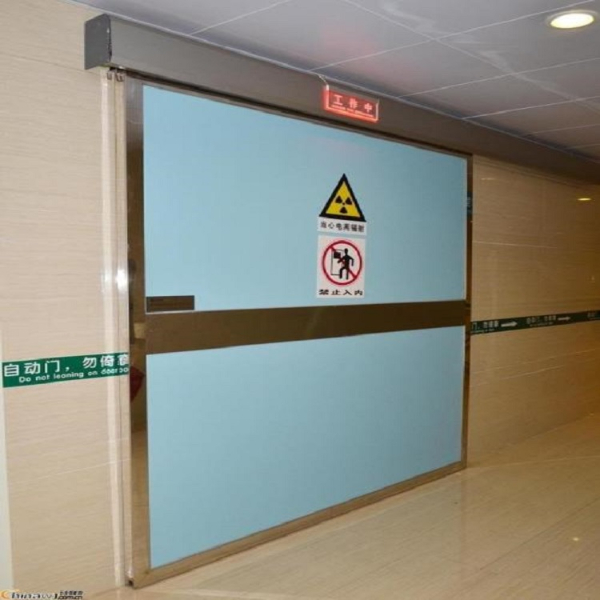
Radiation-shielding lead doors are specialized protective facilities designed to block ionizing radiation such as X-rays and gamma rays. Primarily used in hospital radiology departments, CT rooms, operating rooms, and nuclear industries, they aim to protect personnel from radiation exposure.
Core Principle
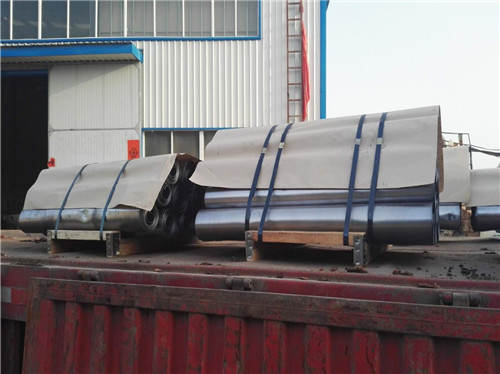
The protective function of lead doors primarily relies on the unique properties of lead: its high atomic number (82) and high density (approximately 11.34 g/cm³) enable effective absorption and attenuation of radiation energy. This causes radiation to gradually dissipate as it passes through the lead plate, preventing penetration.
The door body typically employs a composite structure of “lead plate + outer base material.” The thickness of the lead plate directly determines the protection level (common thicknesses range from 1-20 mm, with 2-5 mm commonly used in medical CT rooms), while the outer material (such as stainless steel or steel plate) enhances durability and installation compatibility. Simultaneously, lead-rubber sealing strips are fitted between the door frame and door panel to ensure seamless closure and prevent radiation leakage.
Main Types and Structures
By Opening Method: Includes manual doors and automatic doors (automatic doors feature motors, remote controls, etc., supporting wireless operation).
By Opening Size: Single-leaf doors (width ≤ 1200 mm), double-leaf doors (width 1200–1400 mm), and double-door configurations (width ≥ 1400 mm).
Specialized Functionality Derivatives:
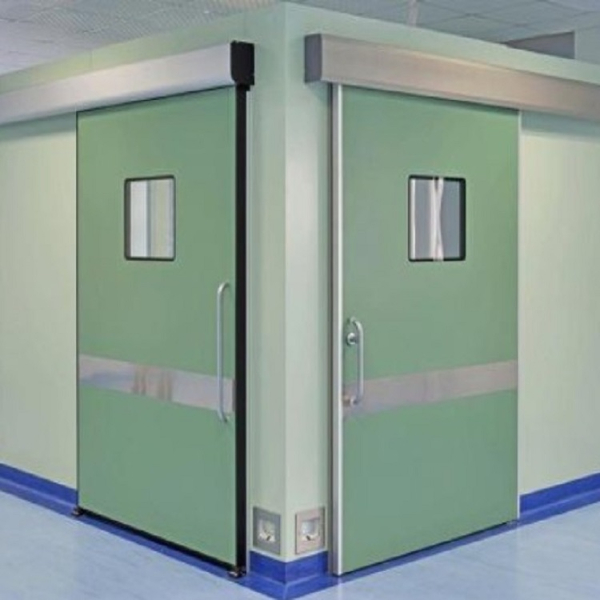
Examples include airtight radiation-shielding lead doors, which incorporate airtight seals beyond standard lead doors. These are suitable for scenarios requiring both radiation protection and air cleanliness control (e.g., hospital operating rooms).
6
Door frames typically use galvanized steel plates or steel studs, filled internally with flame-retardant materials (e.g., honeycomb paper core panels). Surface finishes include high-pressure electrostatic powder coating, stainless steel, or PVC laminate.